Our Agile Enterprise Software Development Process
Discover Renderbit’s agile enterprise software development process designed for scalable, cloud-native platforms. Architecture-first, DevOps-driven, and built for growth.
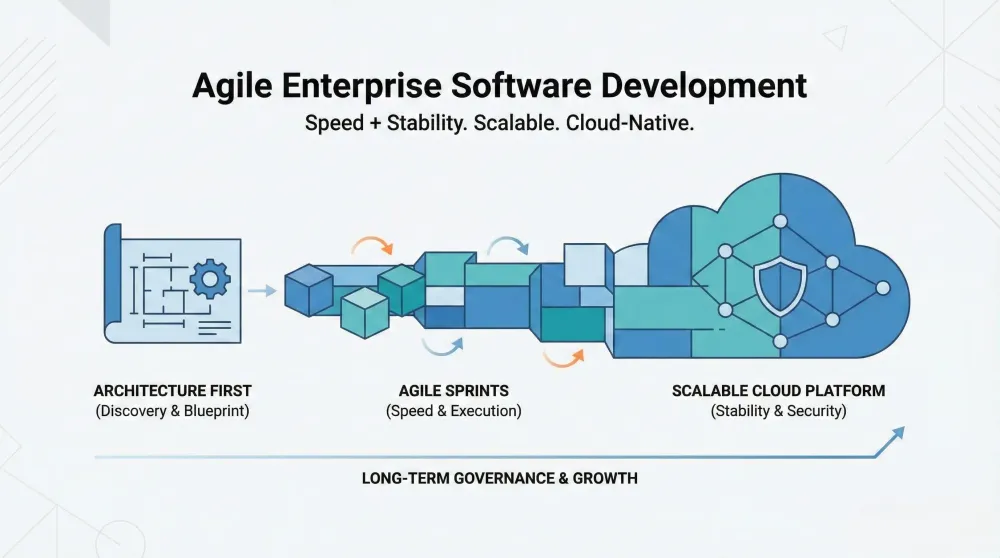
How Renderbit Delivers Scalable, Cloud-Native Platforms Without Compromising Speed or Stability
In enterprise software development, speed without structure leads to chaos. Structure without agility leads to stagnation.
At Renderbit Technologies, we combine agile software development with enterprise-grade architectural discipline to deliver scalable digital platforms that are fast, resilient, and future-ready.
This is not “move fast and break things.” This is to move fast, and build it right the first time.
Why Enterprise Software Needs a Different Agile Approach
Traditional agile works well for small teams and MVPs.
But enterprise systems require:
- Architectural foresight
- Infrastructure planning
- Security governance
- Scalability modeling
- Deployment discipline
Without these, rapid development turns into technical debt.
Our process ensures that speed and scalability coexist.
Phase 1: Discovery & Architectural Blueprint
Before a single line of code is written, we define the foundation.
What Happens in This Phase:
- Business objective alignment
- Technical feasibility analysis
- Scalable architecture design
- Cloud infrastructure planning
- Data modeling strategy
- Risk identification
We create an Architecture Blueprint Document that outlines:
- Application layers
- API strategy
- Database design
- DevOps pipeline
- Scalability considerations
- Security approach
This ensures that development starts with clarity, not assumptions.
Phase 2: Scalable System Design
We design for:
- Horizontal scalability
- Modular architecture
- Clean separation of concerns
- Future integrations
- High-availability environments
Key principles we follow:
- Cloud-native architecture
- API-first development
- Event-driven systems (where applicable)
- Stateless service design
- CI/CD pipeline readiness
This phase eliminates 80% of long-term scaling issues.
Phase 3: Agile Sprint Execution (2–3 Week Cycles)
Development is delivered in structured sprints.
Each sprint includes:
- Defined scope
- Sprint planning
- Feature implementation
- Code review
- QA validation
- Staging deployment
Working software is delivered every few weeks — not months.
Clients receive:
- Sprint reports
- Demo sessions
- Roadmap visibility
- Technical transparency
Agile at Renderbit does not mean uncontrolled iteration.
It means measured velocity with architectural stability.
Phase 4: DevOps & Zero-Downtime Deployment
Enterprise systems cannot afford downtime.
Our DevOps workflow includes:
- Automated testing
- Continuous integration
- Infrastructure as code
- Environment parity (Dev / Staging / Production)
- Blue-green or rolling deployments
- Monitoring & logging setup
We design cloud environments that are resilient and production-ready from day one.
Phase 5: Security, Performance & Scalability Testing
Before production release, we validate:
- Load performance
- Database optimization
- API efficiency
- Security vulnerabilities
- Role-based access control
- Encryption protocols
Enterprise-grade platforms must handle growth without re-engineering.
We test for scale before scale happens.
Phase 6: Long-Term Scalability & Governance
After launch, our work doesn’t end.
We provide:
- Technical roadmap planning
- Scalability forecasting
- Infrastructure cost optimization
- Feature expansion planning
- Codebase maintainability governance
This prevents:
- Architectural drift
- Accumulated technical debt
- Uncontrolled feature sprawl
We build platforms that evolve cleanly and not collapse under growth.
What Makes Our Agile Process Different?
- Architecture First, Code Second
We design before we develop.
- Enterprise Discipline with Startup Speed
You get rapid delivery without sacrificing long-term scalability.
- Cloud-Native by Default
We build distributed systems and modern infrastructure environments.
- Transparent Collaboration
You see what’s built, when it’s built, and how it’s built.
- Zero Legacy Philosophy
We avoid shortcuts that create future liabilities.
Who This Process Is Designed For
Our agile enterprise development process is ideal for:
- Funded startups preparing to scale
- Enterprises modernizing legacy systems
- SaaS founders building global platforms
- Organizations investing $25K+ into long-term digital infrastructure development
If you need quick code at the lowest cost, we may not be the right fit.
If you need scalable, reliable, investor-ready technology, we are.
Agile Without Compromise
Enterprise software development is not about delivering features quickly. It is about delivering sustainable systems that support growth.
At Renderbit Technologies, our agile methodology ensures:
- Speed
- Stability
- Scalability
- Security
- Long-term maintainability
Because your software is not a short-term experiment. It is the backbone of your business.
Related Blogs
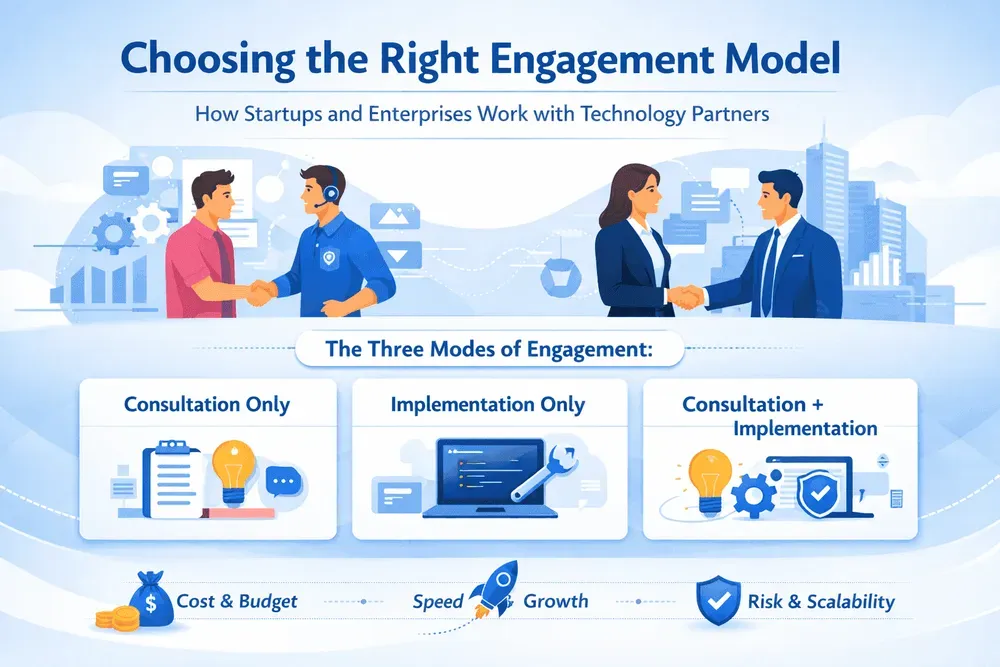
Choosing the Right Engagement Model: How Startups and Enterprises Work with Technology Partners
Explore the three key engagement models, consultation only, implementation only, and consultation + implementation, to choose the best technology partnership for your startup or enterprise.
Choosing the Right Engagement Model: How Startups and Enterprises Work with Technology Partners
Explore the three key engagement models, consultation only, implementation only, and consultation + implementation, to choose the best technology partnership for your startup or enterprise.
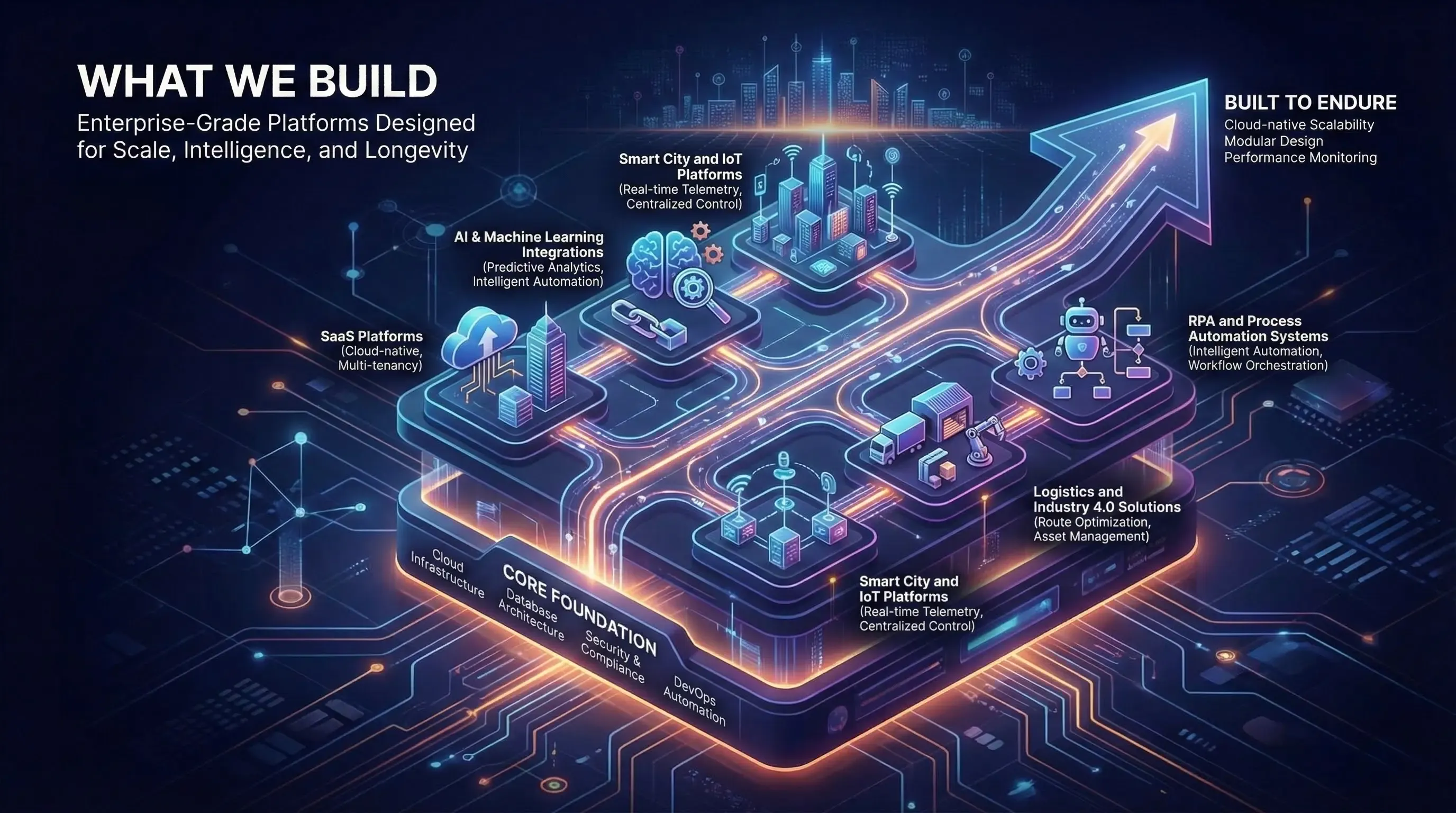
What We Build - Enterprise-Grade Platforms
At Renderbit, we do not build software for short-term functionality. We build enterprise-grade platforms engineered for performance, resilience, and sustained growth.
What We Build - Enterprise-Grade Platforms
At Renderbit, we do not build software for short-term functionality. We build enterprise-grade platforms engineered for performance, resilience, and sustained growth.
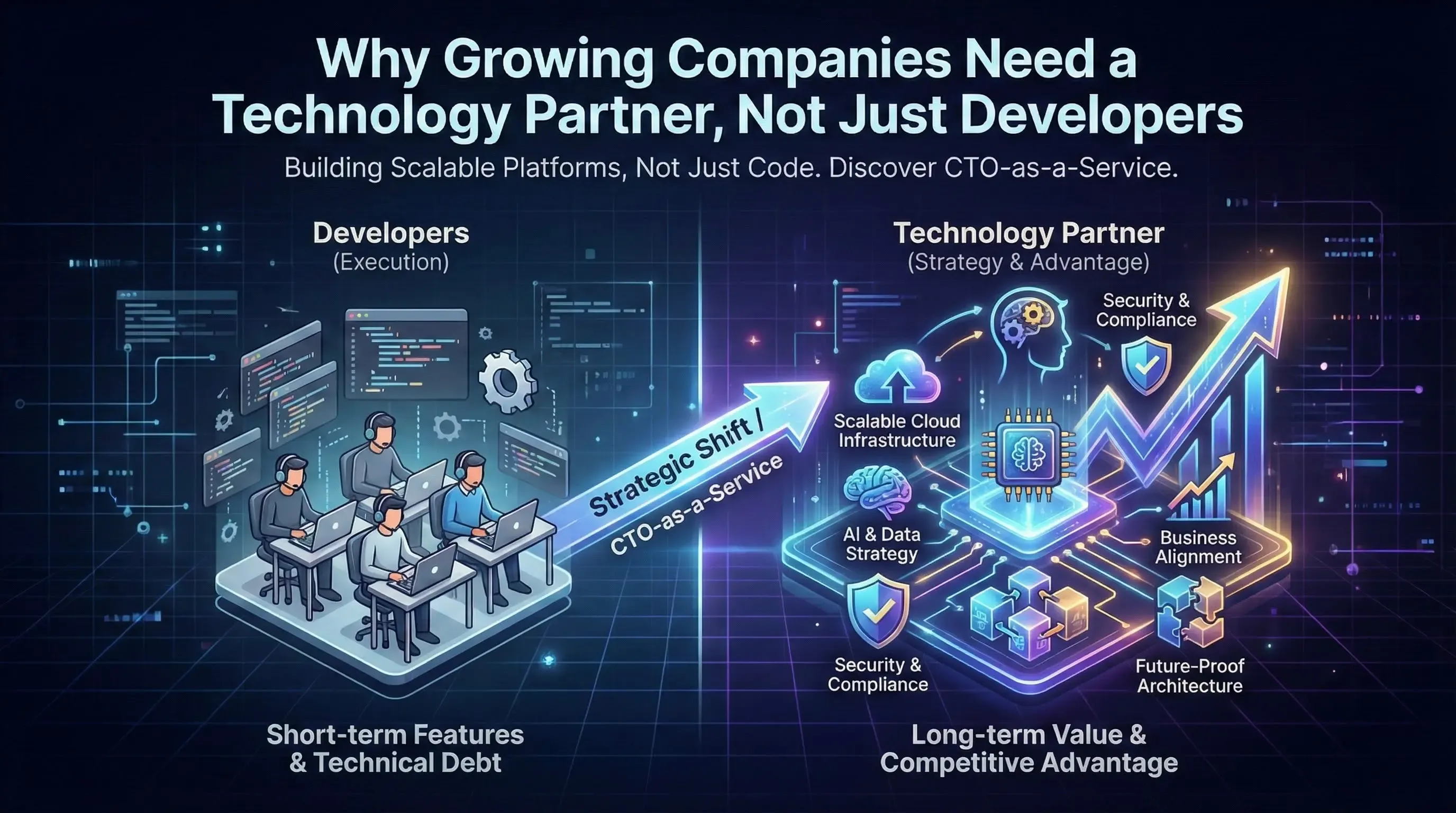
Why Growing Companies Need a Technology Partner, Not Just Developers
Discover why scaling startups and enterprises need a strategic technology partner, not just developers, to build scalable platforms and avoid costly rework.
Why Growing Companies Need a Technology Partner, Not Just Developers
Discover why scaling startups and enterprises need a strategic technology partner, not just developers, to build scalable platforms and avoid costly rework.
See Our Work in Action.
Start Your Creative Journey with Us!

Renderbit Helper
Welcome!
How can I help you today?