IEM-UEM Group PhD Cell Compliance Driven Digitalisation
Architecting a Compliance-Driven Document Management Ecosystem for Doctoral Research
Executive Summary
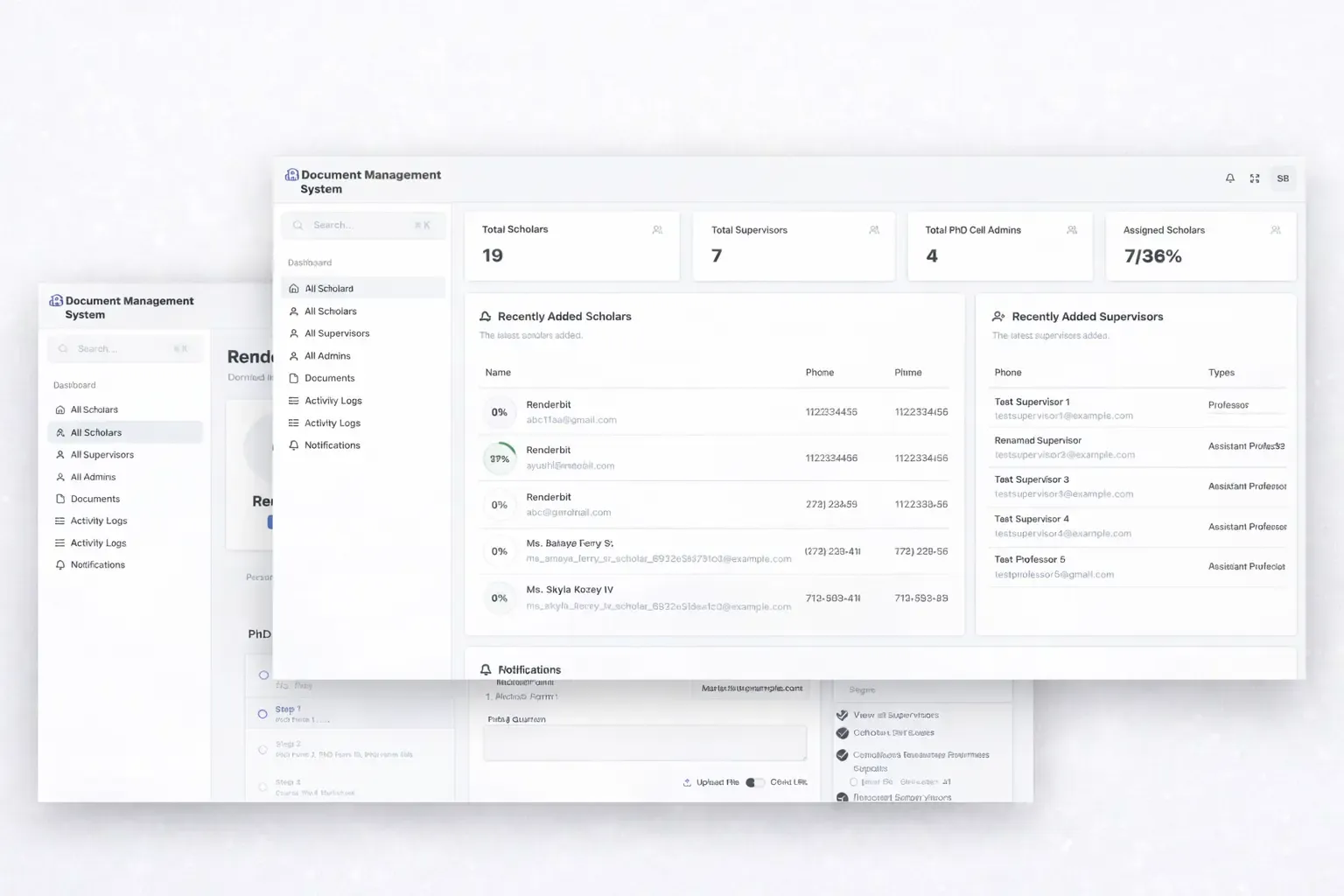
A PhD program is a multi-year marathon of compliance, rigorous documentation, and strict deadlines. For the University of Engineering & Management (UEM), Jaipur, managing this manually across hundreds of scholars and supervisors was becoming an operational bottleneck.
Renderbit Technologies engineered the PhD Documents Management Integration System (DMIS)—a bespoke digital ecosystem that digitizes the entire doctoral lifecycle. From “Coursework” to “Convocation,” the system enforces University Grants Commission (UGC) guidelines, automates deadline tracking, and ensures a seamless flow of critical documents between Scholars, Supervisors, and the PhD Cell.
The Renderbit Solution: A “Stage-Gated” Submission Engine
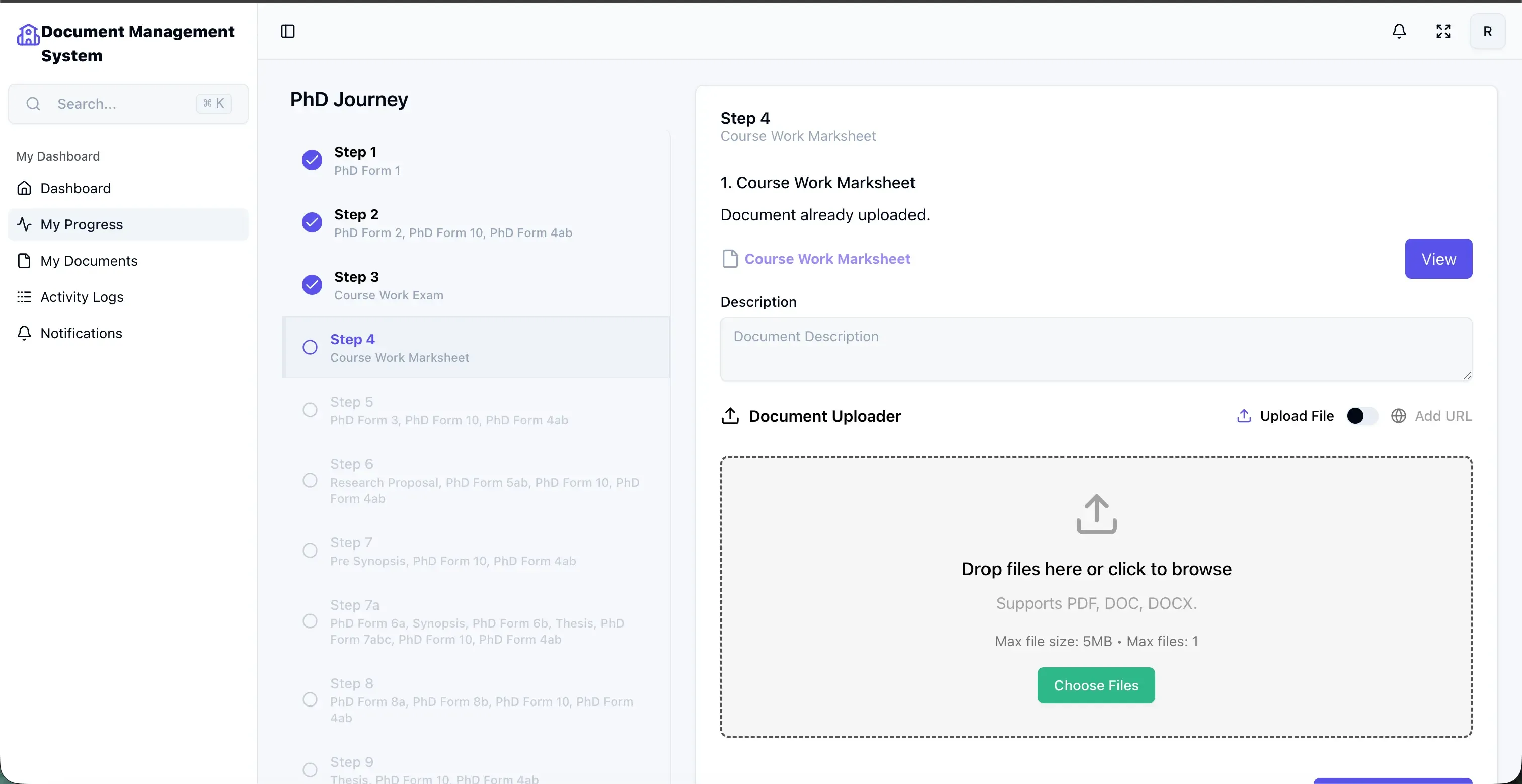
We didn’t just build a file uploader; we built a Process Enforcement Engine. The system is mapped directly to UEM’s 12-step regulatory framework, ensuring that a scholar cannot proceed to “Thesis Submission” without clearing “Pre-Synopsis.”
The “Smart” Timeline & Document Matrix
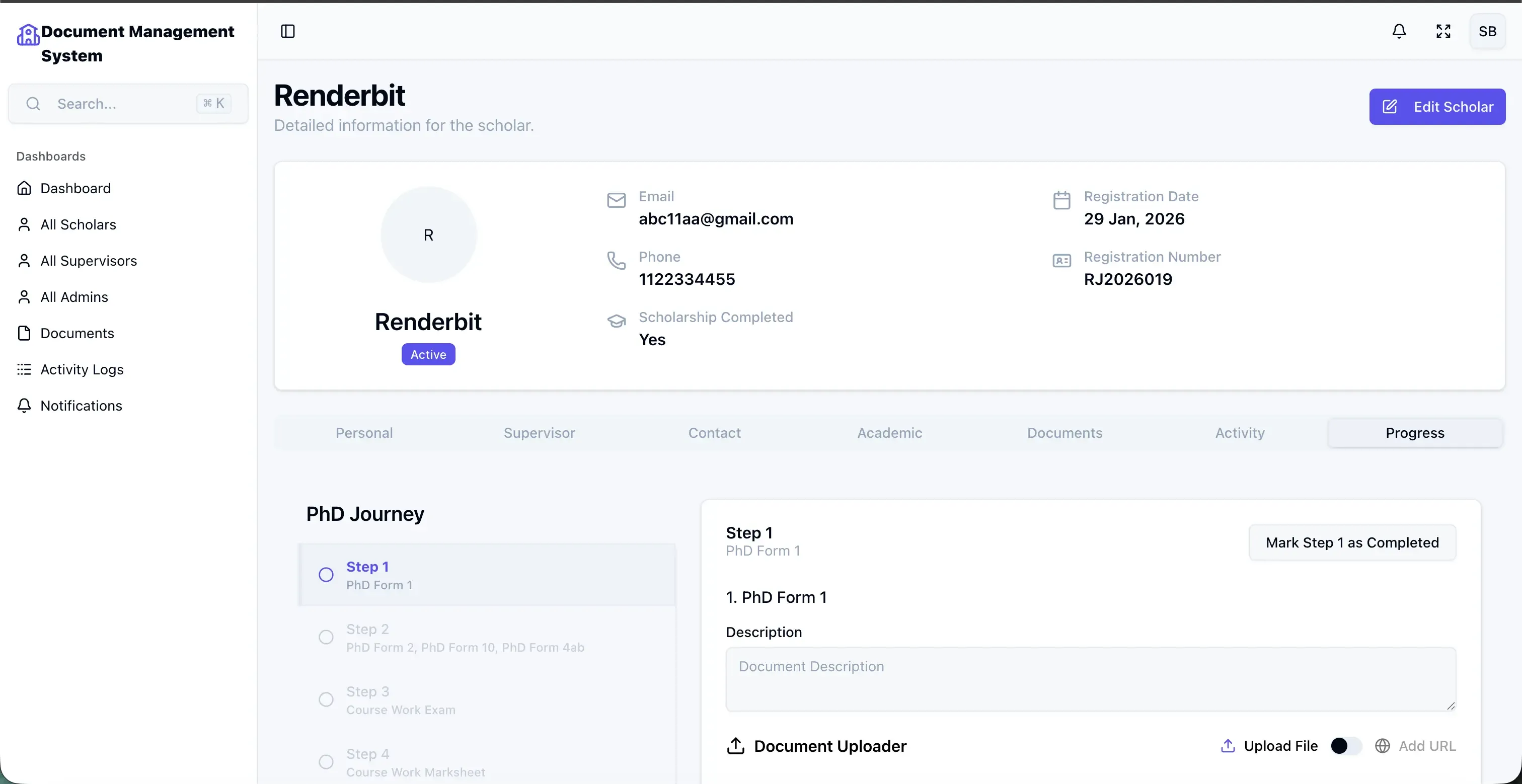
The system creates a personalized digital roadmap for every scholar. It understands exactly what document is needed at what stage.
Phase 1: Foundation & Registration (The Digital Baseline) While entrance exams happen offline, the system initializes the scholar’s digital twin by digitizing the BRC (Supervisor Allotment) and Registration details.
- System Action: Uploads Ph.D. Form 2 (Step-1) and Ph.D. Form 1 (Step-2) to lock in the scholar’s start date and supervisor mapping.
Phase 2: The Coursework & Proposal Window (Months 0-18) This is the high-activity phase. The system enforces the 18-month hard deadline for the Research Proposal.
- Scholar Task: Upload Ph.D. Form 3 for Coursework scheduling.
- Critical Milestone: Submission of Ph.D. Form 5ab (Research Proposal).
- Compliance Check: The system triggers 30-day advance notifications via SMS and WhatsApp to ensure this 18-month deadline is not breached.
- Phase 3: Progress Tracking (The Marathon)
- Recurring Requirement: The system demands a Six-Monthly Progress Report (Annexure 1 format).
- Supervisor Control: Supervisors can review drafts, request changes, and approve the final version directly on the portal.
Phase 4: Pre-Synopsis & Thesis Defense (The Final Stretch) This stage has the strictest validation logic.
- Pre-Requisite Check: The system verifies the “Minimum Standards” logic: Two Research Papers in SCI/Scopus journals and two conference presentations.
- Document Logic:
- Step 7 (Pre-Synopsis): Scholar uploads Ph.D. Form 7a.
- Step 8 (Thesis Submission): Once Pre-Synopsis is approved, the system unlocks Ph.D. Form 7b and Form 8a/8b.
- Plagiarism Gate: The system records the “Plagiarism Certificate” (Form 8b), enforcing the <10% similarity rule.
Technical Architecture & Key Innovations
UGC Compliance Governor We built a logic layer that acts as a gatekeeper for university regulations.
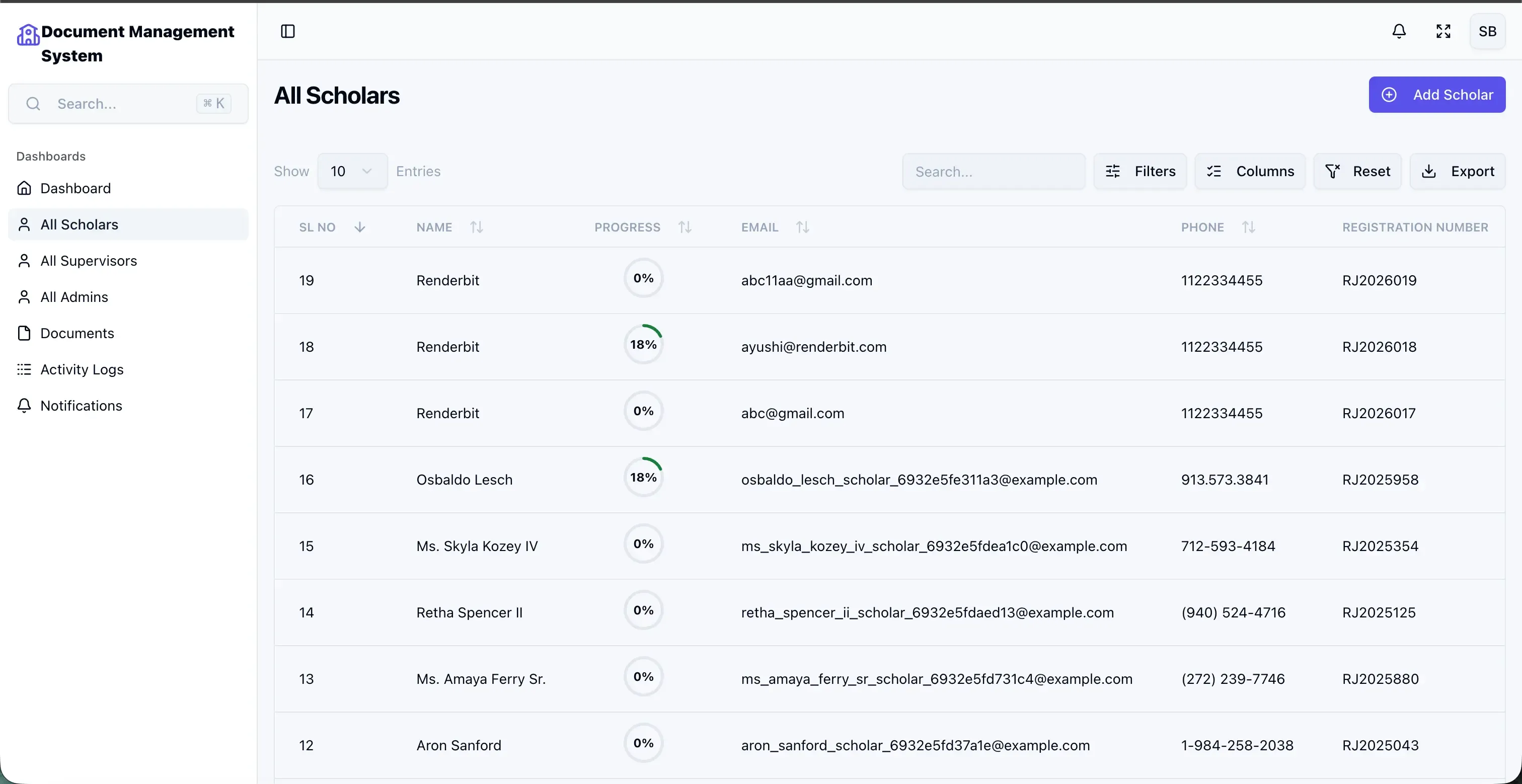
- Supervisor Quota Management: The system automatically checks the designation of a supervisor (Professor, Associate, or Assistant) and prevents the assignment of new scholars if their quota (8, 6, or 4 respectively) is full.
- Intelligent Document Versioning
- Storage constraints: To manage server load, we implemented a 10MB limit per file and a total storage cap of 200MB per scholar.
- Version History: The system retains the last 3 versions of every document type, allowing supervisors to compare the evolution of a draft while preventing storage bloat.
- Role-Based Access Control (RBAC)
- Scholar View: Sees only their timeline, upcoming deadlines, and upload slots.
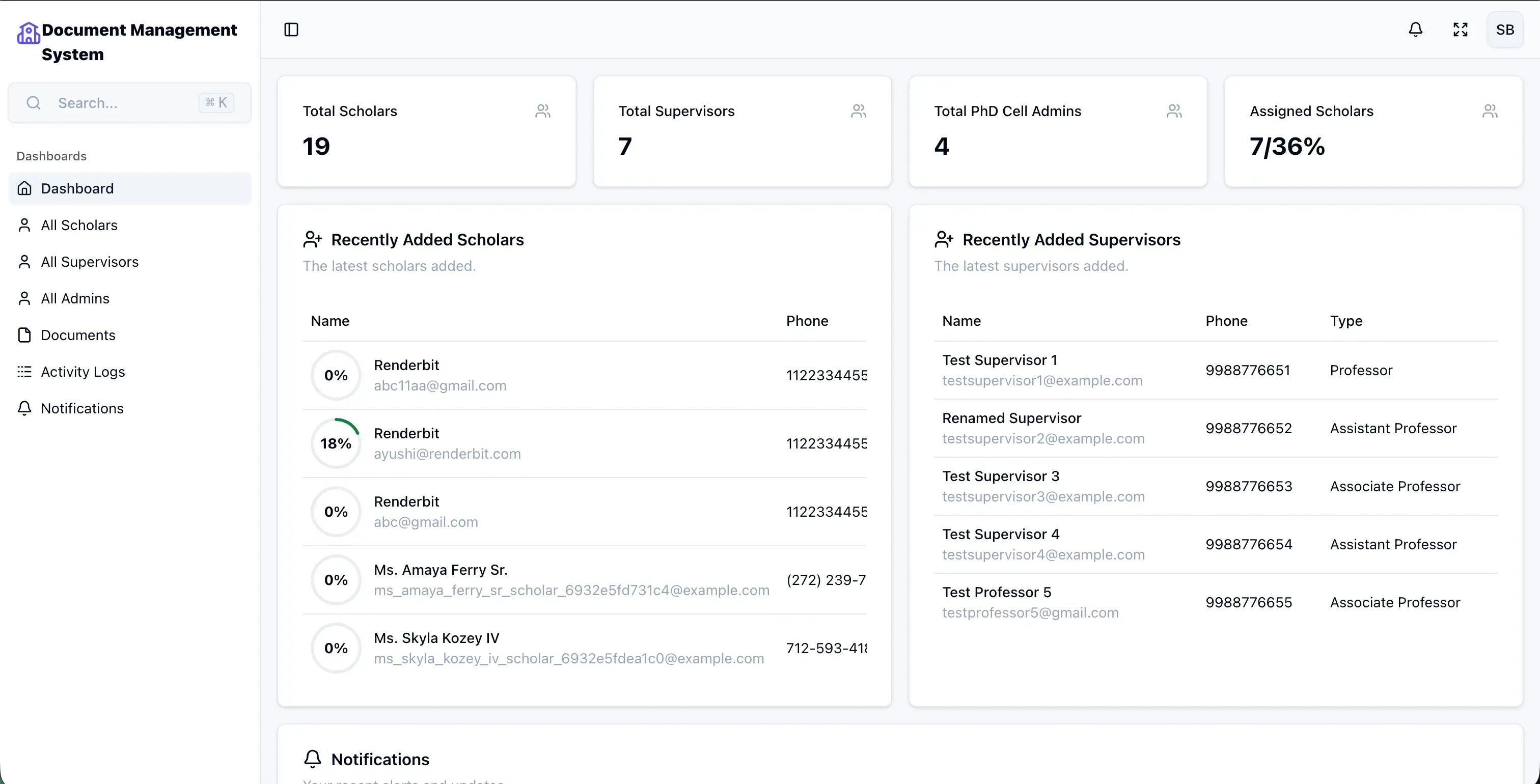
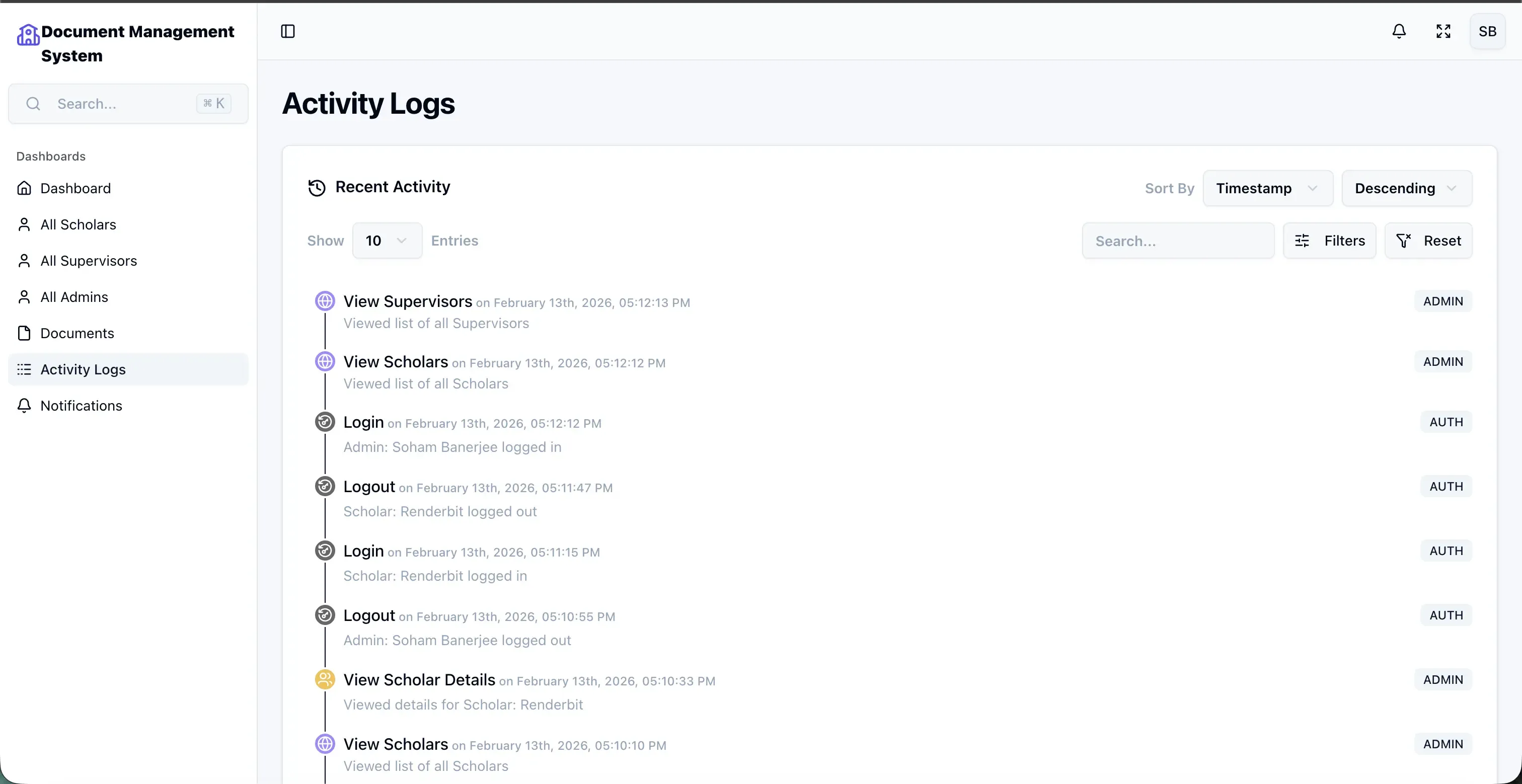
- Supervisor View: Sees a dashboard of all assigned scholars, their progress status, and pending approvals.
- Admin/PhD Cell View: Full visibility into the “Health” of the PhD program—who is delayed, who is graduating, and who needs a nudge.
- External Integration Strategy
- Thesis Repository: Integration with Shodhganga/Infilibnet is handled via a secure link management system, ensuring the university maintains a local record while complying with national repository standards.
- Security: Access is strictly restricted to university domain emails (@uem.edu.in), ensuring data privacy.
Core Focus
Custom Workflow Engine, Role-Based Access Control (RBAC), Cloud Storage
The Challenge: The 'Paper Chase' in Academic Research
The doctoral process at UEM follows a strict 12-Step rigid workflow. The manual management of this workflow created significant risks:
- Compliance Blindspots: UGC guidelines mandate specific scholar-to-supervisor ratios (e.g., Professors are capped at 8 scholars). Manual tracking made it difficult to enforce these limits in real-time.
- Version Control Chaos: With a Thesis evolving over years, tracking "Draft_Final_v3.pdf" vs. "Draft_Final_Real.pdf" was error-prone.
- Missed Deadlines: Critical milestones, such as the 18-month deadline for Research Proposal submission, were often missed due to lack of automated alerts.
The Impact
Renderbit’s DMIS transformed the UEM PhD Cell from a "file-storage" room into a "digital command center."
- 100% Visibility: The PhD Cell now knows the exact status of every scholar in the 12-step lifecycle.
- Proactive Compliance: "Surprise" deadline misses are eliminated thanks to the automated 30-day warning system.
- Standardization: Every scholar now uses the standard Form 1 through Form 10 templates, eliminating formatting errors and administrative rejection.


Ready to modernize your academic infrastructure?
Renderbit is the Tech Leader in EdTech workflow automation. We don't just write code; we understand the rigorous demands of higher education.
Contact Us to discuss your strategy.
Related Posts





See Our Work in Action.
Start Your Creative Journey with Us!

Renderbit Helper
Welcome!
How can I help you today?