Scalable by Design: Building Cloud-Native Systems Right
Learn how scalable cloud-native architecture eliminates technical debt and ensures performance, reliability, and long-term growth for digital products.
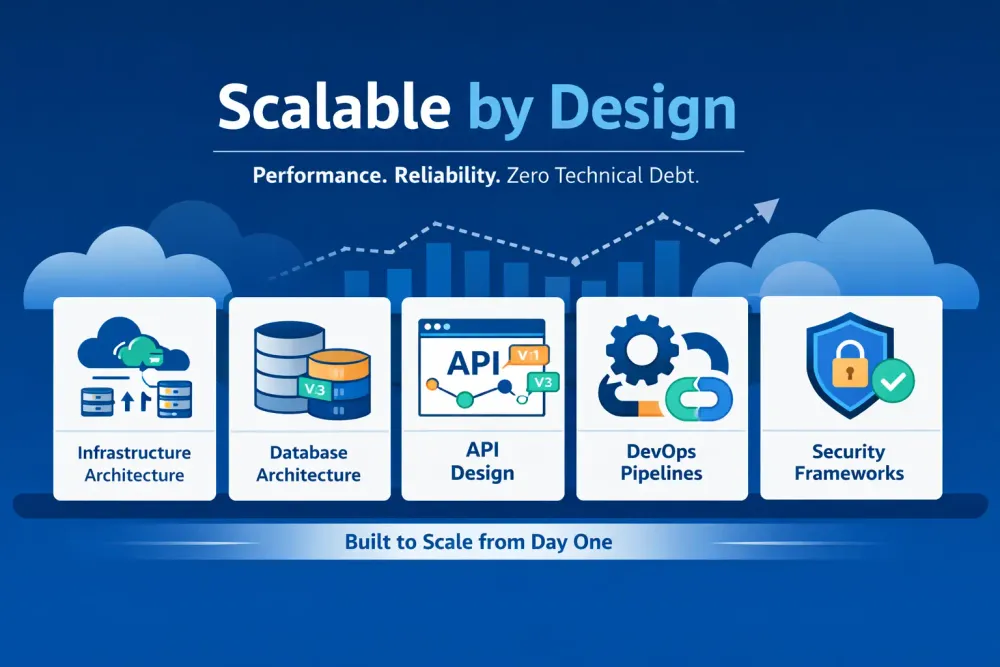
Performance, Reliability, and Zero Technical Debt
Most digital products do not fail because of weak ideas. They fail because the foundation beneath them was never built to grow.
A platform might launch successfully. It might even gain traction. Users arrive, revenue begins to flow, and momentum builds. Then growth exposes cracks in the architecture. Pages slow down. Databases struggle. Deployments become risky. Small changes take weeks. Infrastructure costs balloon.
At that point, the real problem becomes clear. The system was built to launch, not to scale.
At Renderbit, scalability is not something we “optimize later.” It is embedded from day one.
The Illusion of Early Success
In the early stages of a product, almost any architecture works. A single server can handle traffic. A tightly coupled backend seems manageable. A quick database schema gets the job done.
The problem is that early success masks structural weaknesses.
When usage increases, when features multiply, when integrations expand, every shortcut compounds. Performance degrades. Reliability suffers. Technical debt accumulates quietly in the background.
Founders often interpret this as a need for more developers. In reality, what they need is architectural clarity.
Because scalability is not about writing more code. It is about writing the right code on the right foundation.
What “Scalable by Design” Actually Means
Scalability is not just about handling more users. It is about sustaining performance, reliability, and velocity as complexity increases.
Infrastructure Architecture
Built to Expand Automatically
Cloud-native systems are designed to scale horizontally. Ensure traffic spikes do not cause failures using:
- Auto-scaling groups
- Load balancers
- Container orchestration
When infrastructure is intentional, growth does not require emergency patches.
Database Architecture
Optimized for Growth, Not Just Launch
Poor schema design becomes the first bottleneck in growing systems.
We design:
- Read replicas for high traffic
- Indexed query strategies
- Efficient data modeling
- Partitioning for large datasets
Your database should accelerate growth, not restrict it.
API Design
Modular. Versioned. Future-Ready.
APIs are the backbone of modern applications.
We build clean, versioned APIs that:
- Support rapid feature evolution
- Prevent breaking changes
- Enable external integrations
- Maintain performance under load
Scalable APIs reduce future rebuild costs.
DevOps Pipelines
Speed Without Risk
Deployment should not introduce instability.
Our approach ensures:
- CI/CD automation
- Infrastructure as Code
- Environment consistency
- Observability and monitoring
Scaling teams should move faster over time, not slower.
Security Frameworks
Protection Embedded by Design
Security is not a layer added at the end.
We embed:
- Role-based access control
- Encryption at rest and in transit
- Compliance readiness
- Secure authentication frameworks
Scalable systems must also be secure systems.
Scalability is the sum of these decisions, not a single optimization pass.
Performance Is a Competitive Advantage
Users may not understand architecture, but they feel performance instantly.
A slow checkout flow reduces revenue. A delayed dashboard erodes trust. An unreliable API damages integrations and partnerships.
Performance is not a cosmetic improvement. It is directly tied to conversion, retention, and reputation.
Cloud-native applications built correctly are optimized for performance at every layer. Stateless services allow horizontal scaling. Caching strategies reduce unnecessary load. Observability systems detect degradation before users notice.
When performance is intentional, growth becomes an opportunity rather than a threat.
Reliability Is What Protects Your Brand
Downtime is expensive. Not just financially, but reputationally.
A scalable system is designed for failure scenarios. Load balancers distribute traffic intelligently. Auto-scaling groups spin up additional capacity during demand spikes. Database replicas ensure read operations remain stable even under heavy usage.
Resilience is engineered, not hoped for.
When reliability is embedded into architecture, your product can withstand success. Influencer campaigns, media coverage, or seasonal surges do not become liabilities. They become milestones.
What Happens When You Ignore Scalability?
| Built for Launch Only | Built for Scale |
|---|---|
| Quick architecture decisions | Long-term infrastructure planning |
| Monolithic bottlenecks | Modular cloud-native systems |
| Performance drops under load | Auto-scaling and load balancing |
| Increasing infrastructure costs | Cost-optimized scaling |
| Frequent re-platforming | Long-term stability |
An expensive platform that cannot scale is a liability.
The Hidden Cost of Technical Debt
Technical debt is rarely visible in the early months. It hides behind deadlines and product momentum.
But over time, it compounds like interest.
Features take longer to ship. Refactoring becomes unavoidable. Infrastructure bills increase because inefficient systems consume more resources than necessary. Security vulnerabilities emerge from rushed implementations.
An expensive platform that cannot scale is not an asset. It is a liability.
When scalability is embedded from the beginning, your investment compounds instead of eroding. Each new feature builds on a stable foundation. Each optimization improves efficiency rather than compensating for structural flaws.
Cloud-Native Done the Right Way
Building cloud-native applications the right way requires more than deploying code to AWS, Azure, or Google Cloud.
It requires intentional design.
It requires understanding how services communicate, how data flows, how workloads distribute, and how systems evolve over time.
It requires anticipating the next stage of growth before it arrives.
At Renderbit, we design systems that remain lean under pressure, resilient under load, and adaptable to change. Scalability is not an afterthought. It is the baseline.
Because growth should amplify value, not expose weaknesses.
Frequently Asked Questions
It means scalability is considered from day one. Infrastructure, database structure, APIs, DevOps, and security are all architected with future growth in mind.
Because they are built for early traction, not long-term growth. Shortcuts taken during MVP stage compound into technical debt once usage increases.
No. Hosting on AWS, Azure, or GCP does not automatically make a system scalable. Architecture decisions determine whether the system can grow efficiently.
Efficient systems use infrastructure intelligently. Auto-scaling prevents over-provisioning. Optimized databases reduce compute overhead. Clean architecture reduces refactoring costs.
If you expect growth, investment, or large user acquisition campaigns, scalability must be prioritized before traction accelerates.
The Long-Term View
If your digital product is meant to grow, its architecture must grow with it.
The question is not whether your platform will scale. It is whether it will scale gracefully or painfully.
A product built for launch may impress early. A product built for scale sustains success.
Scalability is not about handling more users. It is about sustaining performance, reliability, and engineering velocity as complexity grows.
Your architecture determines whether growth becomes an opportunity or a crisis.
If you want a deeper technical breakdown, contact us to guide you on building scalable cloud-native applications the right way.
Related Blogs
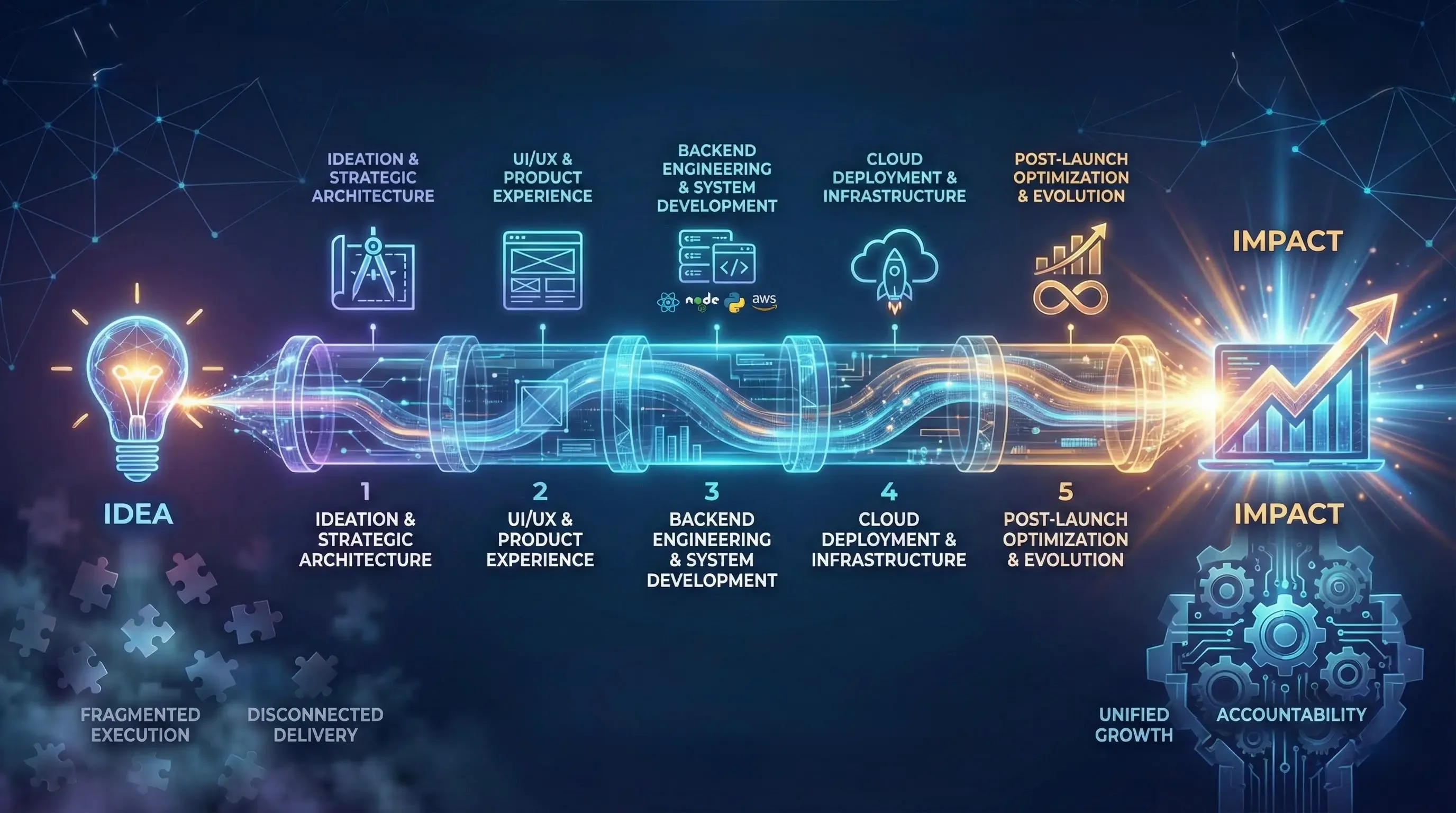
End-to-End Product Development | Full Lifecycle Execution
From ideation to deployment and optimization, Renderbit delivers end-to-end product development with scalable architecture and production-grade execution.
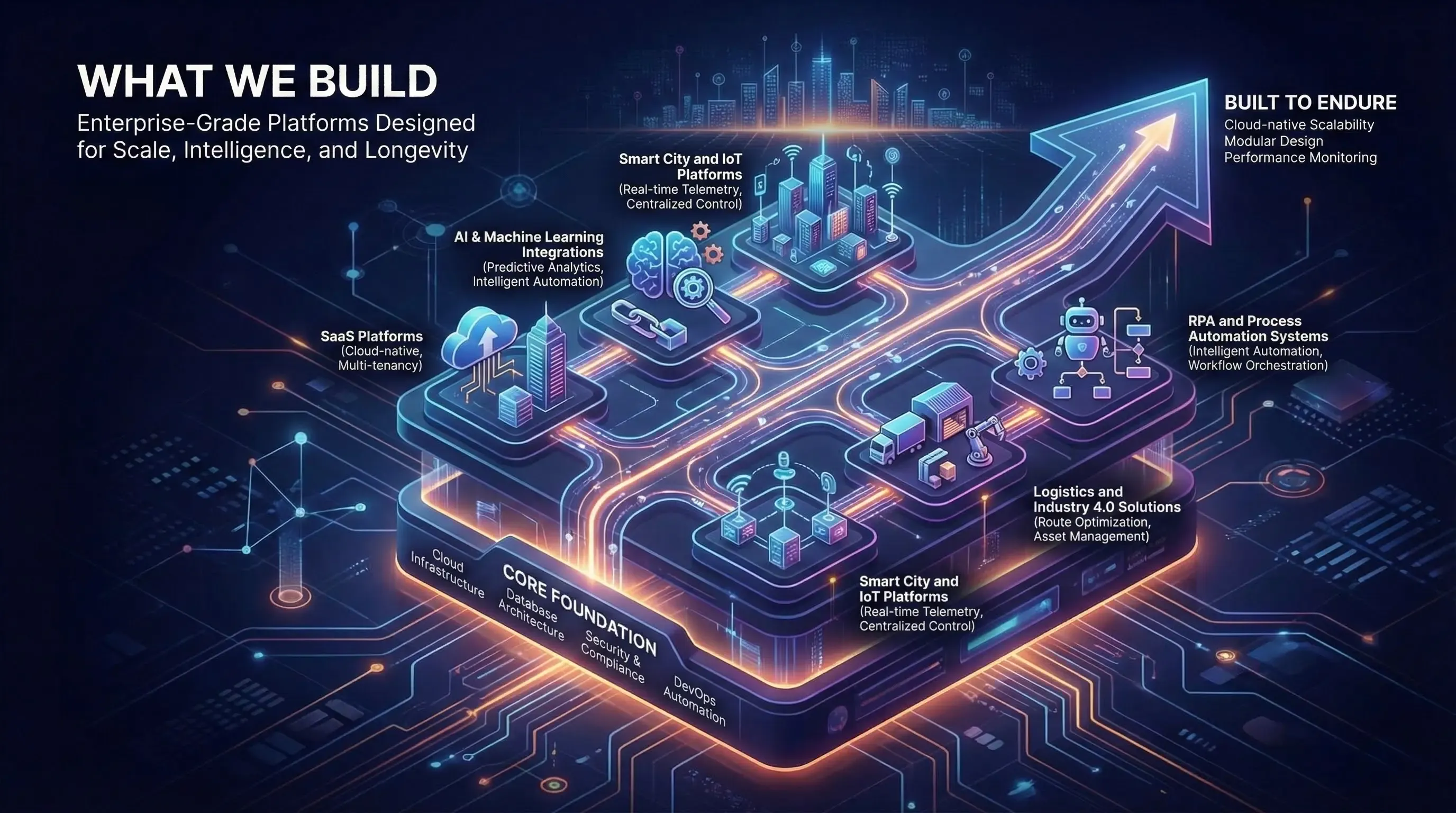
What We Build - Enterprise-Grade Platforms
At Renderbit, we do not build software for short-term functionality. We build enterprise-grade platforms engineered for performance, resilience, and sustained growth.
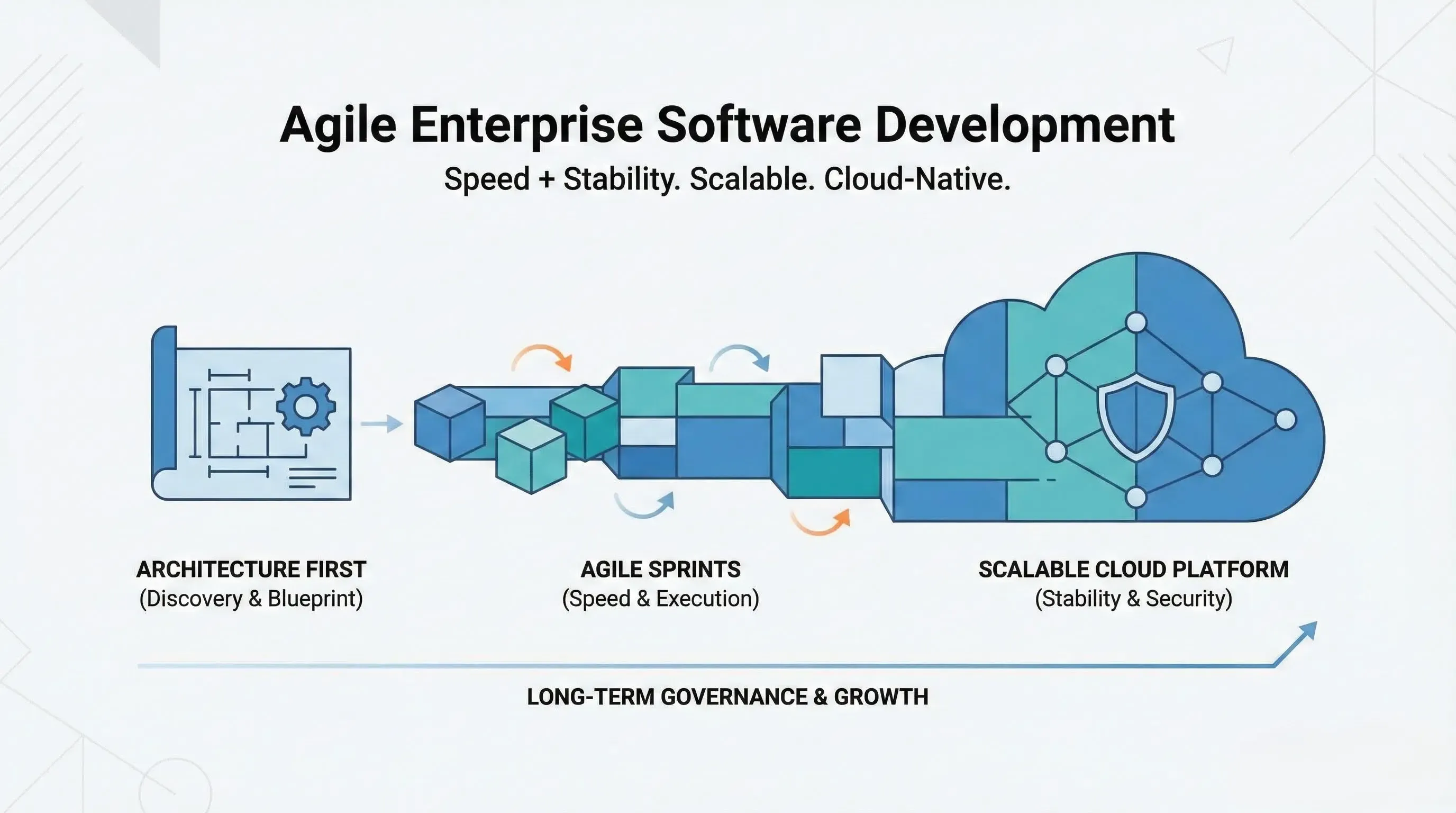
Our Agile Enterprise Software Development Process
Discover Renderbit’s agile enterprise software development process designed for scalable, cloud-native platforms. Architecture-first, DevOps-driven, and built for growth.
See Our Work in Action.
Start Your Creative Journey with Us!

Renderbit Helper
Welcome!
How can I help you today?